
Facilitated Workshops
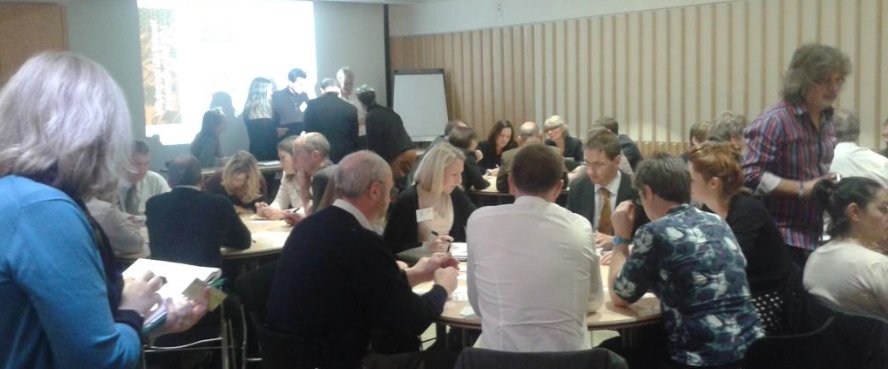
These workshops are intended for organisations, businesses and communities
Single day or two day with overnight workshops to guide you and your community from its current, flawed state, to a new state rich with new possibilities.
Ideally for between 6 to 18 participants, representative of as many aspects of the system under inquiry.
You will leave the workshop with a new story, a stronger community and a bag full of possibilities.
Three types of workshop are on offer but they can easily be adapted to fit any need.
Code Red Net-Zero

In the current state of Red Alert what can be done within your organisation, or by your community to reduce CO2 emissions? Why stop there? What could you do to Thrive and become net-positive, improving the environment and climate as you go?
Patterns & Possibilities

Is there a flaw in your system? Is there room for improvement,? Do you yearn for a more creative and innovative future? Perhaps you need to share more, have stronger relationships or just follow a common path.
Post-Covid Reset

As we emerge from Covid and lockdowns what might be the new ways of working. Are there new opportunities to be grasped. Can you reinstate and build upon your social capital.
“All tales are at some level a journey into the woods to find the missing part of us, retrieve it and make ourselves whole. That is the pattern, that is how we tell stories.“
John Yorke – Into the woods
There are three essential steps in every workshop:
- Landscaping narratives – PROBE
- Imagining Possibilities – SENSE
- Storyboarding a more desirable future – RESPOND
and an additional three, optional steps for a deeper inquiry, depending upon time and the current situation:
- Shifting to a more desirable pattern
- Provoking possibilities
- Tracking and fanning
A Narrative Ecology workshop takes you on a journey which has its essence in all the archetypal ancient tropes of going into the woods. We journey in together as loosely connected individuals with different perspectives, understandings, and motivations. Inside, in circles, we tell stories, listen, and laugh and things that were previously invisible begin to take shape.
Shared understandings, acceptance of different perspectives and most importantly, new relationships start to form. From the patterns of how things are we start to imagine how things could be. Every insight and new possibility need to be caught and added to the narrative landscape.
In order leave the forest we need to retrieve the ‘something’ that we need and complete the task of which patterns can we change and shift and what imagined possibilities are up to the job.
As we nurture and strengthen these possibilities by storyboarding, new paths emerge and we leave the woods stronger and more self-aware. Ready to prepare the ground for our probabilities to flourish.
In summary we bring together a group of people and facilitate them through a series of sessions in which they will:
- use stories to make sense of the landscape, paying particular attention to the current state, need for change and direction.
- Undesirable patterns can be mapped to their more desirable alternatives. We can work with perspectives and/or emergent themes to imagine further possibilities. Then we look at what we might do to make these shifts and possibilities happen.
- A co-created coherent selection of experiments are chosen to be storyboarded in a form that others can understand, support and engage in their actualisation.
You and I can run these workshops in a single day [ideally 10:00 till 16:30] or if you want something more complete wider reaching why not organise an overnight [11:00 till 1700 and 0900 till 1430].
Costs will depend upon your needs but I can guarantee a competitive daily rate with basic travel and subsistence.
If you are at all interested in hearing more about this type of workshop then please get in touch:
Train to be a Narrative Ecologist
Why not train to be a narrative ecologist or at the very least learn how to apply the insights and methods Ron has uncovered on his journey?

Online modular training. Each module is 90 minutes long and consists of a 60 minute masterclass and 30 minutes discussion.
Currently five modules of which 1, 3 and 5 are essential. 2 and 4 are optional.
Currently designed for a single organisation or community to teach how to facilitate narrative ecology workshops.
Ideally no more than 12 participants to allow for discussion.
001 Landscaping narratives – PROBE
- Map your insights into stories
- Cultivate relationships
- Reveal hidden layers of meaning
This is the ‘working with story’ module. When a group comes together the best way to ensure engagement, share knowledge and understanding and make sense collaboratively is by way of stories and storytelling. Without stories a workshop is awash with unfamiliar faces, new facts, and individual perspectives. By using stories, we can share memorable insights, make patterns visible and realise what we might do to improve our system, together.
In this session we will look at the diverse ways timelines and story-circles can be used to engage.
At the end of the session, you should be:
- Able to explain the two different participatory narrative inquiry methods and able to choose which method is appropriate for the issue/system under inquiry.
- Able to take a group through the initial mapping stage
- Able to explain and illustrate the structure of an insight
002 Shifting undesirable Patterns
- Survey the patterns that exist
- Sense what holds these patterns in place
- Shift patterns to a more desirable state
This is the pattern shifting module. Using the narrative landscapes that emerged in module 1 we can begin to explore the ‘undesired’ and ‘desired’ patterns. We will look at the different ways the group can explore the patterns. This module includes the importance of feedback to make a system more self-aware.
At the end of this session, you should be:
- Able to explain three different ways to make the hidden patterns visible
- Able to choose which method is appropriate
- Able to take a group through a pattern shifting exercise
003 Imagining possibilities – SENSE
- Sense and seed possibilities
- Build connections
- Map and expand your possibility space
This is the beginner’s level creative thinking module. Here we will look at using the outputs from module 001 to inspire imaginative ideas and create a portfolio of possibilities (ideas that might improve the system). This module includes the importance of connecting people to make a system more resilient. We will look at the importance of perspective and how to blend direct, indirect, and more creative methods together in a session.
At the end of this session, you should be:
- Able to explain three diverse ways to generate ideas and possibilities
- Aware of the basic principles for facilitating a group through a complex issue
- Able to plan and deliver a short ‘possibilities workshop’ to get the most out of the time available.
004 Provoking Possibilities
- The top twenty provocations that can set your creativity on fire
- Open pathways to new ways of thinking
- Look at things that may not have occurred to you before.
This is the more advanced creative thinking module. Here you will learn about how you as a facilitator might provoke hugely different perspectives without delving into any of the detail. Problem solving and pattern shifting exercises can quickly dry up and are often constrained by existing thinking. Here we will look at some of the most effective ways you can provoke a shift in thinking and bring about new insights and possibilities.
At the end of this session, you should be:
- Familiar with at least ten ways to provoke a group into new ways of thinking
- Aware of some of the ways a group can limit their possibility space
- Able to plan and prioritise which provocations you might use
005 Storyboarding a more desirable Future – RESPOND
- Storyboard your preferred shifts and possibilities
- Contrast the old story with the new story
- Nurture possibles into probables
This is the ‘preparing the ground’ module. Any workshop can generate several ideas or possibilities. The half-life of a promising idea is about one hour so three days after a workshop most of the possibilities are long forgotten. Here we will look at turning a seed of an idea into a more fully formed and carefully structured story. Insights and their possibilities, derived from such a workshop need to be met with emotional engagement, so that people cannot just find the reason but also the motivation to create change.
At the end of this session, you should be:
- Familiar with three templates that can be used to storyboard an idea and make it direct, memorable and capture the imagination
- Aware of the basic neuroscience of how the brain works with stories and how a story can be crafted to match this.
- Aware of the collaborative possibilities in creating, testing, and telling of these stories and how they ‘prepare the ground’ to make a possible much more probable.
If you would like to book online training or discuss face to face training then please get in touch: ezrond@gmail.com
About
Formed in August 2008 after Ron had completed 21 years at English Nature, developing systems that support Nature Conservation. He was working in Knowledge Management there when he first met Dave Snowden of Cognitive Edge in 1998 who introduced him to this Narrative, Complexity and Anthropology based approach.

Satisfied Customers include:
Oracle
Pfizer
BAE Systems
EU FP7 Project
Girl Guides Association
NHS
Friends of the Earth
Surrey Wildlife Trust
Natural England
Fire Service
Stories
Clonk – That’s a different noise
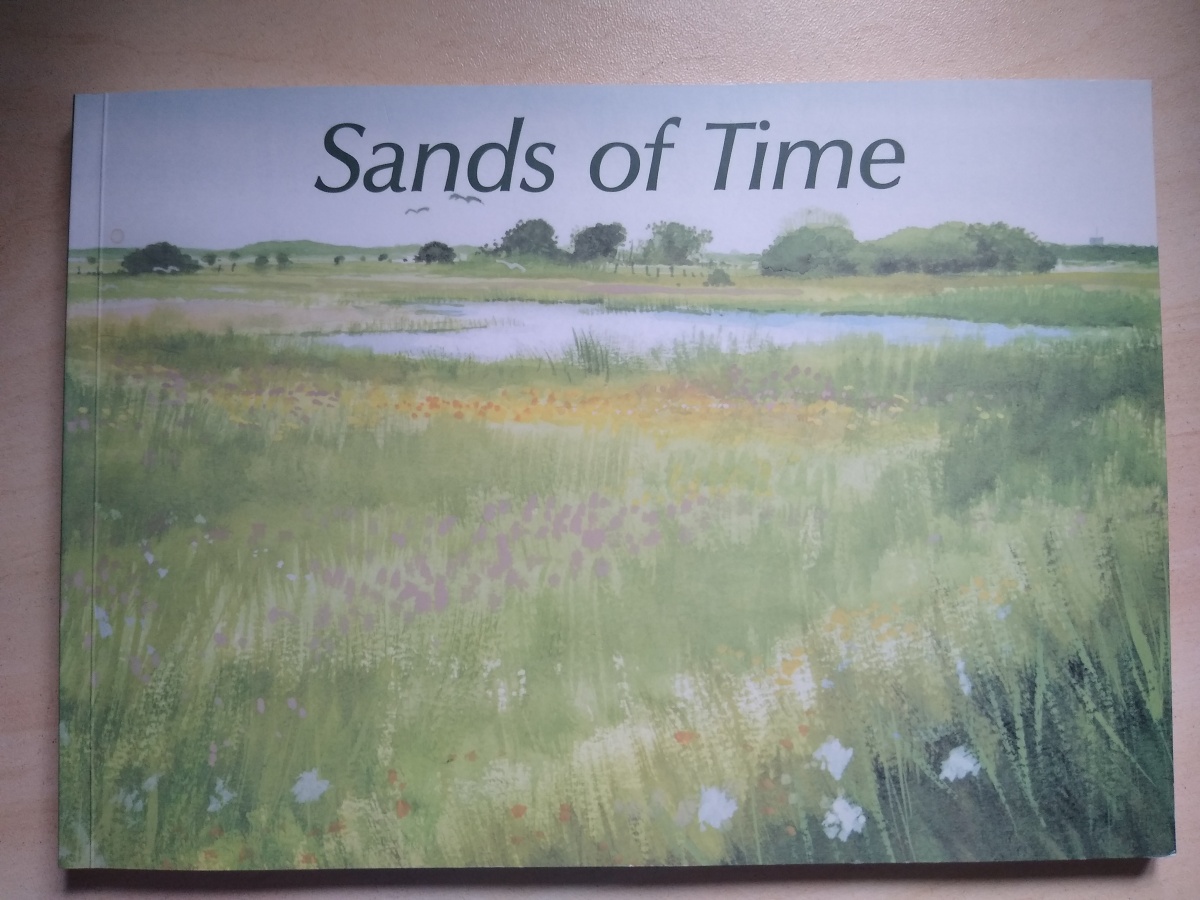
From the previously mentioned Sands of Time publication this is my second favourite story (the first is my straightening the river Haven tale which i have told for over 20 years). Somewhere on one of my minidiscs I have an audio version of John telling us the tale and we laughed for almost ten minutes…
Sands of Time revisited
In 2004 I was asked to write an article on our approach to storytelling and I just had to make a feature out of the wonderful ‘Sands of Time’ publication, shown above. [Art by local artist T.E.J. Brooker] A dream oral history project which was completed before I had even started in working with narrative.…
May the cynefin be with you
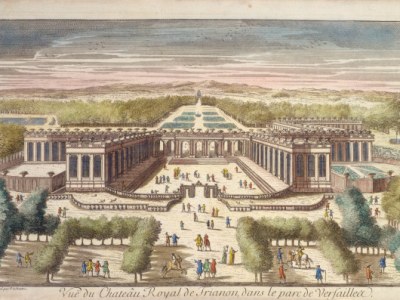
I can still clearly remember my first public speaking event after engaging with Dave Snowden and his complexity, anthropology and narrative approach. It was 11th June 2001 at a tiny venue in France called the Palace de Versailles for a massive Marcus Evans Conference. I distinctly remember as I checked in that Sean Connery was…
Be careful what you wish for
Back in June 2001 I was working in English Nature and for two years had been pursuing as many opportunities to engage with storytelling in all its forms. In those days it was necessary to support everything you did with numerical targets. So , in the strong context that this was a proposal in the…
Narrative Ecologist
Taking inspiration (again) from Chris Corrigan and his recent call for a return to blogging, like others, I am going back to my blog and taking ownership of my words and thoughts. Twenty Four years ago I first met Dave Snowden who shifted my personal story from that of process modelling and systems analysis to…
Narrative Ecology Workshops
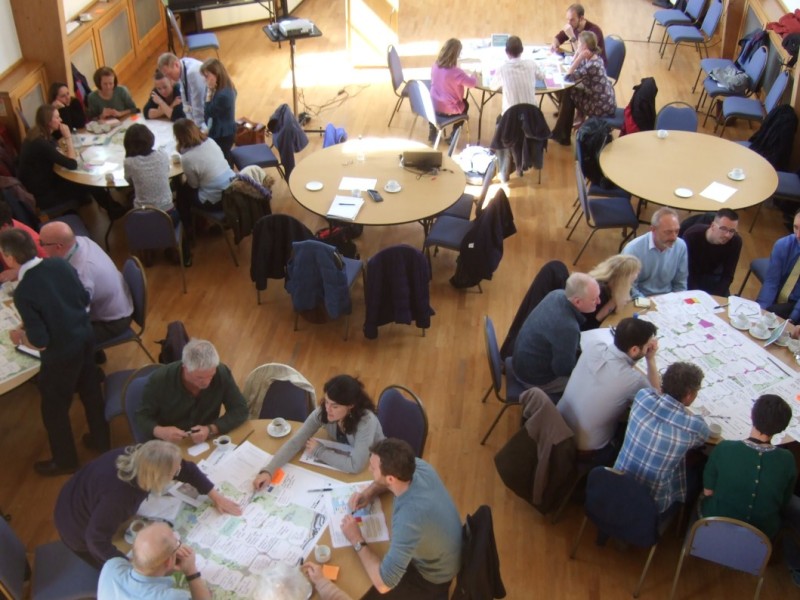
What if 18 people, representing all aspects of your ‘system’, were to come together for one day, and work through a sequence of workshop methods, such that they left with a new (more desirable system) story, stronger connections to each other (and the system), and a bag brimming with possibilities. A typical workshop will: Answer…
Loading…
Something went wrong. Please refresh the page and/or try again.
Connect or Follow me on Social Media
 Ecology of Knowledge